Key takeaways
- Price is built from distance, space and weight on the vehicle, temperature, number of drops and how tight the delivery window is.
- Small loads are usually priced per pallet space or per carton, full loads per vehicle, and most carriers apply a minimum charge.
- Fuel levy, tolls, waiting time, hand unloading and futile pickups are the extras to ask about before you accept a quote.
- Flexible windows, consolidated orders and accurate dimensions are the easiest ways to bring the price down.
- We don’t publish a rate card; send the job details and we return a quote within 24 hours.
On this page
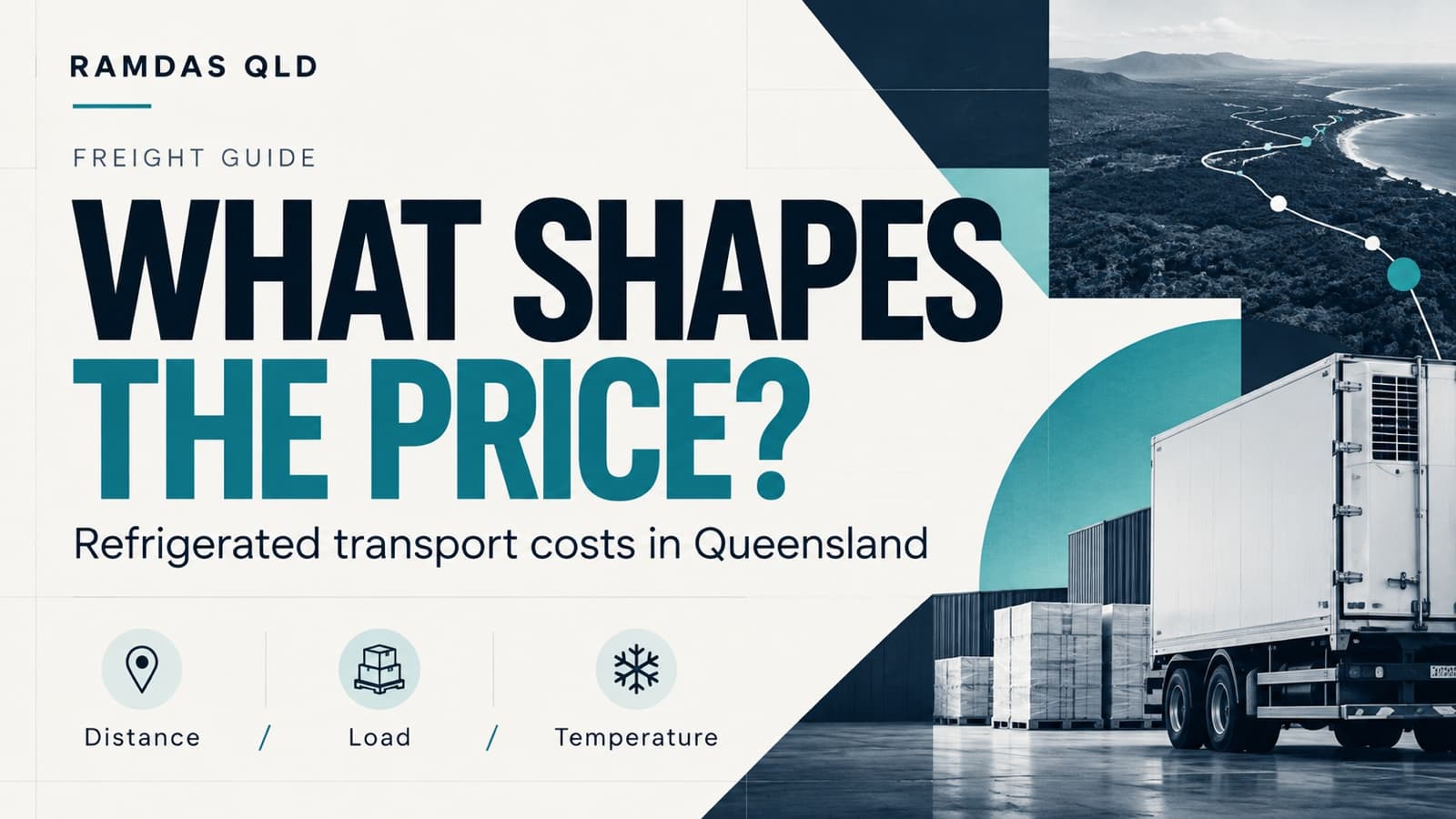
There is no single rate for refrigerated transport in Queensland, and we don’t publish a rate card. The cost of a run comes from a handful of things: how far it goes, how much space and weight it takes on the vehicle, whether it is chilled or frozen, how many stops are involved and how tight the delivery window is. Give a carrier those details and you get a firm price. We return quotes within 24 hours, and often the same day for routine routes.
This guide explains how that price is built, which extras catch people out, and what you can change about a job to bring the cost down.
What drives the price of a refrigerated run
Every quote is a carrier working out what the job uses up: kilometres, driver time, space on the vehicle and refrigeration. These are the inputs that matter most.
- Distance and zone. Metro deliveries are generally priced by zone, longer runs by distance. Brisbane to Toowoomba is about 125 km; Brisbane to Cairns is about 1,700 km, which is more than one driving shift under heavy vehicle fatigue rules.
- Space. Carriers quote in pallet spaces, or in cartons for small consignments. Space you take is space nobody else can use.
- Weight. Dense product such as meat, dairy and liquids can reach a vehicle’s payload before its floor is full, so weight is priced as well as space.
- Temperature. Frozen and chilled freight need different set points and cannot share a compartment, which affects what else can travel with your load.
- Vehicle size. A van, a small truck and a semi-trailer cost different amounts to run. The right size for the freight and the site keeps the price down.
- Number of drops. One pickup and one delivery is the simplest job. Each extra stop adds driving, unloading time and door openings.
- Time windows and urgency. A delivery that must arrive in a narrow window, or today, limits how the carrier can plan the vehicle around other work.
Pallet, carton and full-load pricing
Refrigerated freight is usually priced in one of three ways, and knowing which applies to your job makes quotes easier to compare.
- Per carton or per consignment. Used for small courier-style jobs, typically in a refrigerated van. A minimum charge normally applies, because the vehicle still has to make the trip.
- Per pallet space. Used for part loads, where your pallets share a vehicle with other compatible freight. Our guide to part-load refrigerated pallet freight covers how that works.
- Per vehicle. Used for full loads and dedicated runs. You pay for the truck and the trip, whether or not every pallet space is filled.
There is a crossover point where enough pallets on a shared service cost more than a dedicated truck. Ask for both prices when you are near the capacity of a vehicle class; our pallet capacity guide shows where those limits sit.
Metro runs, regional runs and backloads
Metro work around Brisbane, Logan, Ipswich and the two coasts is mostly about time: traffic, the number of drops and how long each one takes. Regional linehaul is mostly about distance, and it runs on planned services, so fitting your freight to an existing run costs less than asking for a truck on a day of your choosing.
Direction matters too. A truck that delivers into a region has to come back, and a carrier would rather return with freight than empty. If your load travels the way a vehicle is already heading, that backload space can be priced more keenly. It depends on what is moving that week, so the only way to find out is to ask. You can see where we run on our service areas page.
Common extras on a refrigerated freight quote
These charges are common across the freight industry. Not every carrier applies all of them, so ask which ones are included in the price you have been given.
| Extra | When it applies | How to manage it |
|---|---|---|
| Fuel levy | Added to the base rate and adjusted as fuel prices move | Ask whether the quote includes it and how it is reviewed |
| Tolls | Routes that use toll roads | Ask whether tolls are included or itemised |
| Tailgate or hand unload | No dock or forklift at the site, or cartons carried in by hand | Say so when you book so the right vehicle is sent |
| Waiting time | The vehicle is held past an agreed loading or unloading allowance | Have freight staged and the receiver ready |
| After-hours delivery | Nights, weekends or public holidays | Use business-hours windows where the product allows |
| Futile pickup or redelivery | Freight is not ready, or nobody is there to receive it | Confirm opening hours and a contact name at both ends |
What changes the price, and which way
| Detail | Tends to cost less | Tends to cost more |
|---|---|---|
| Distance | Within one metro zone | Regional or interstate |
| Load size | More pallets per trip (lower cost per pallet) | A single small consignment at minimum charge |
| Timing | A flexible day or a wide window | Same-day, fixed-time or after-hours |
| Drops | One pickup, one delivery | Several stops, or stops far apart |
| Site access | Dock or forklift at both ends | Kerbside, hand unload, restricted access |
| Temperature | One temperature for the whole load | Chilled and frozen together |
| Frequency | Regular, predictable runs | One-off or short-notice jobs |
| Readiness | Product at temperature, wrapped and labelled | Vehicle kept waiting |
None of the right-hand column is a problem. Mixed loads on a multi-temperature vehicle and same-day refrigerated courier work exist because businesses need them. They simply use more of the carrier’s capacity, and the price reflects that.
How to get an accurate quote and pay less
A vague enquiry gets a padded price, because the carrier has to allow for what it doesn’t know. Send these details and the first quote should be the right one.
- Pickup and delivery suburbs, with site type at each end (dock, forklift, kerbside, shopfront).
- Number of pallets or cartons, with dimensions and stacked height.
- Total weight, or weight per pallet.
- Product and required temperature: chilled, frozen or both.
- Date, and the window in which pickup and delivery can happen.
- Whether it is a one-off or a regular run, and how often.
- Anything unusual: hand unload, stairs, booking-in systems, restricted hours.
Ways to pay less
- Widen the window. A day’s flexibility lets the carrier fit your freight to a vehicle already going that way.
- Consolidate. One larger delivery a week usually costs less per pallet than several small ones.
- Have product at temperature and ready. A refrigerated vehicle holds temperature; it is not built to pull warm product down. Freight that is cold, wrapped and staged avoids waiting time and rejected loads.
- Give accurate dimensions and weights. An under-declared load can mean the wrong truck arrives, and a second trip.
- Commit to a pattern. Regular volume on the same days is easier to plan than ad hoc bookings.
What to do next
Write down the seven details in the quote list above for your next run, then send them through our quote form or call dispatch. If you are comparing carriers, ask each one the same questions about fuel levy, tolls, waiting time and minimum charge so the prices line up.
If you have not booked cold freight before, our step-by-step guide on how to book refrigerated transport covers what happens after you accept the quote.
Frequently asked questions
How much does refrigerated transport cost per pallet in Queensland?
There is no standard per-pallet rate. The price depends on distance, weight, temperature, the number of drops and the delivery window, so the reliable way to get a figure is to request a quote with those details.
Why don’t refrigerated transport companies publish their prices?
Because two jobs with the same pallet count can cost very different amounts to run once distance, access, timing and temperature are taken into account. Ramdas QLD prices each run on its details and returns a quote within 24 hours.
Is frozen transport more expensive than chilled?
It can be. Frozen and chilled freight cannot share a compartment, so a frozen consignment may limit what else travels on the vehicle, and that can affect the price.
What is a fuel levy on a freight quote?
A fuel levy is a charge added to the base freight rate that moves with fuel prices. Ask each carrier whether their quote includes it and how often it is reviewed.
Is there a minimum charge for small refrigerated deliveries?
Most carriers apply a minimum charge to small consignments because the vehicle and driver still make the trip. Ask for it when you request a quote so you can decide whether to consolidate orders.
Ramdas QLD dispatch team
Refrigerated transport, Brisbane
Written by the people who plan and run Ramdas QLD's chilled, frozen and multi-temperature freight across Brisbane and Queensland. About us
Sources
- FSANZ — Safe Food Australia (guide to Standard 3.2.2)
- Australian Cold Chain Guidelines 2017 (AFGC)
- NHVR — Standard hours (work and rest requirements)
General information only — check the current standard or your regulator for requirements that apply to your product.