Key takeaways
- A part load shares a refrigerated vehicle with other compatible freight, so you pay for the space you use.
- Freight is matched on temperature first, then on odour, raw versus ready-to-eat, and allergens.
- Shared loads need more flexible timing and involve more door openings than a dedicated truck.
- Product must be at temperature before pickup, wrapped tightly and labelled on two sides.
- Ask for a dedicated-vehicle price as well once your load approaches a small truck’s capacity.
On this page
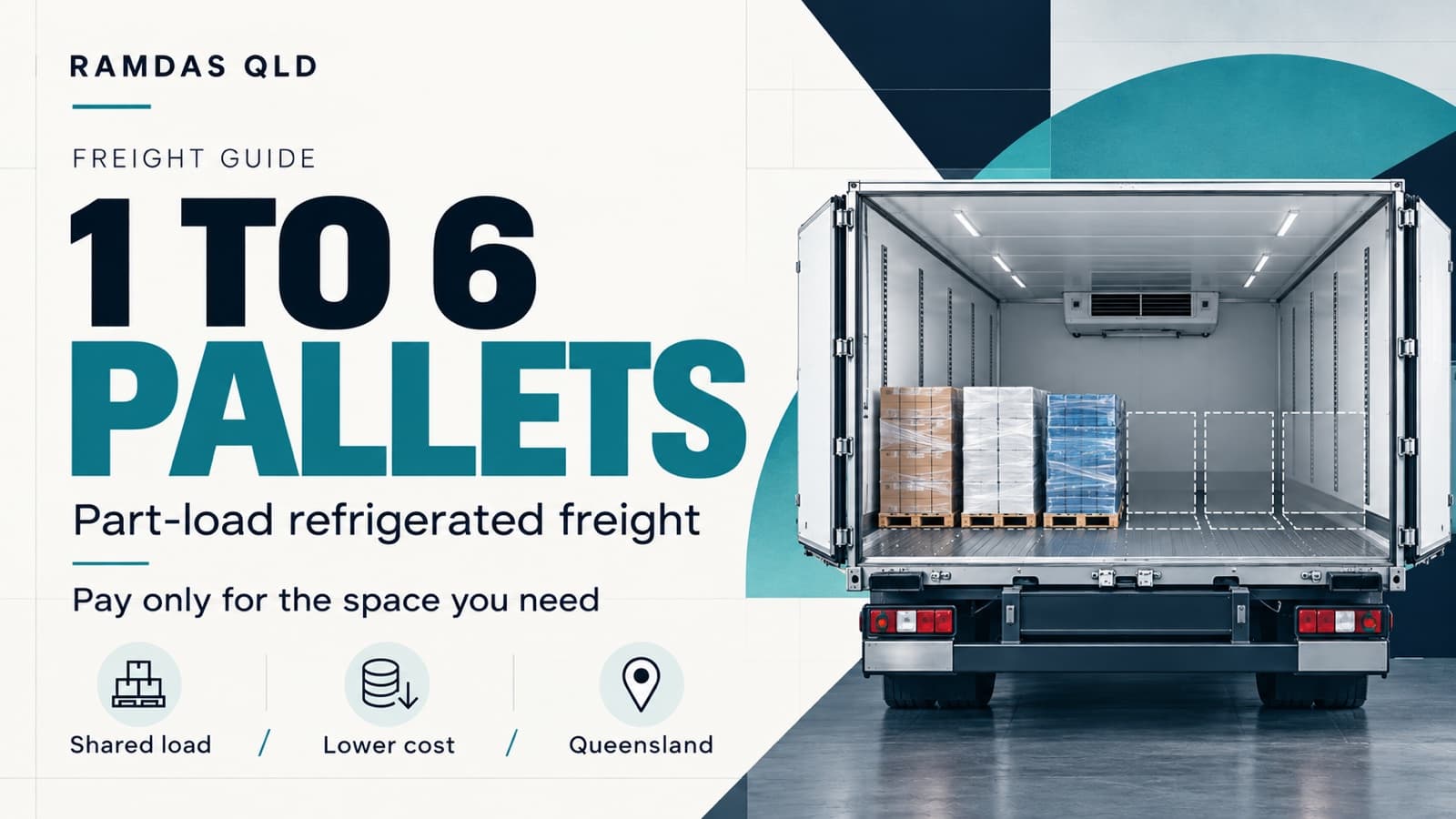
You can send as little as one pallet of chilled or frozen freight without paying for a whole truck. On a part load, your pallets travel on a refrigerated vehicle alongside other customers’ freight at the same temperature, and you pay for the space and weight you use.
The trade-off is flexibility. A shared vehicle follows a route that works for every consignment on it, so pickup and delivery happen within a window. This guide explains how part loads are put together, what they suit, and how to prepare pallets so they arrive in the condition they left.
What a part load is and who it suits
A part load is any consignment smaller than the vehicle carrying it. You may see it called LTL (less than truckload), a shared load or consolidated freight. For refrigerated work it usually means somewhere between one and six pallets.
It suits businesses that ship regularly in volumes too small to fill a truck:
- Small food manufacturers sending finished product to distributors or stores.
- Growers sending a few pallets to market or to a packer.
- Butchers and smallgoods makers supplying wholesale customers.
- Caterers moving prepared food or ingredients between sites.
- Importers and wholesalers breaking stock down for individual customers.
How refrigerated consolidation works
Dispatch groups consignments that are heading the same way and need the same temperature, then plans one vehicle to collect and deliver them in a sensible order. Freight delivered last is loaded first, so it sits at the front of the body and is not handled at earlier stops.
When a run includes both chilled and frozen freight, a multi-temperature vehicle holds them in separate zones behind a movable bulkhead. Frozen product goes nearest the evaporator and chilled sits in its own compartment at its own set point.
Where consignments need to be brought together before a longer run, they can be cross-docked through a partner cold storage facility. We don’t publish fixed run days here, because consolidated services depend on the freight moving that week. Ask dispatch which days suit your lane.
What makes freight compatible
Not everything cold can travel together. A carrier checks four things before putting consignments on the same vehicle.
| Check | Why it matters | What the carrier needs from you |
|---|---|---|
| Temperature | Product in one compartment shares one set point. Bananas, mangoes and tomatoes are damaged at the temperatures used for meat and dairy. | The exact temperature range your product requires |
| Odour and taint | Strong-smelling product can taint dairy, eggs, bakery goods and anything in porous packaging. | What the product is and how it is packed |
| Raw vs ready-to-eat | Raw meat, poultry and seafood are kept apart from food that will not be cooked again. | Whether the product is raw or ready-to-eat, and whether cartons are sealed |
| Allergens | A damaged carton of nuts, seafood, flour or milk powder can contaminate freight beside it. | Any allergens present, particularly in loose or unsealed packaging |
The owner of the product sets its temperature limits, so state them when you book and don’t assume “chilled” is enough. Our guide to chilled vs frozen transport temperatures lists typical ranges for common products.
Part load vs a dedicated truck
| Part load (shared) | Dedicated vehicle | |
|---|---|---|
| You pay for | The space and weight you use | The whole vehicle and trip |
| Timing | Pickup and delivery within a window | Times set around your job |
| Route | Other stops before or after yours | Direct from pickup to delivery |
| Door openings | One at each stop on the run | Loading and unloading only |
| Handling | Possible cross-dock on longer lanes | Loaded once, unloaded once |
| Temperature | Shared set point per zone | Set to your product alone |
| Best for | Regular small consignments | Urgent, fragile or larger loads |
More door openings and more handling are real risks, and good practice is what controls them. The refrigeration unit is switched off while doors are open so it doesn’t draw warm air through the load, and doors stay closed between drops. Vehicles are pre-cooled before loading, and on our runs calibrated probe temperatures are read and recorded at pickup and delivery, so there is a record for your consignment and not just for the truck.
How to prepare pallets for a shared load
On a shared vehicle your pallet is handled next to other people’s freight, so it needs to be stable, identifiable and cold before the truck arrives.
- Get product to temperature before pickup. A refrigerated vehicle holds the temperature product is loaded at; it is not designed to chill it down. Warm product also warms the freight beside it.
- Wrap tightly, to the pallet. Stretch wrap should lock the cartons to the pallet base so the stack cannot shift.
- Keep cartons inside the pallet edge. Overhang gets crushed and can turn one pallet space into two. The standard Australian pallet is 1165 × 1165 mm.
- Label two adjacent sides. Show the consignee name, delivery address, required temperature and the pallet number, such as 2 of 3.
- Check the height. Ask the carrier for the maximum pallet height on the vehicle. Freight must sit below the load line so air can move over it.
- Don’t plan to stack. Chilled and frozen pallets usually can’t be double-stacked.
- Stage the freight. Have pallets in your cool room near the door, with paperwork ready, so the vehicle is not kept waiting with its doors open.
What to tell the carrier
- Pickup and delivery addresses, with dock, forklift or kerbside access at each.
- Number of pallets, their dimensions and stacked height.
- Weight per pallet.
- Product description and the temperature range it needs.
- Whether it is raw or ready-to-eat, and any allergens or strong odours.
- The dates and windows that work at both ends, and how often you will ship.
The more of this a carrier knows, the tighter the price. Our article on refrigerated transport costs in Queensland explains how each detail feeds into a quote.
When to step up to a dedicated vehicle
A part load stops being the best option when one of these applies.
- Volume. A small truck typically carries 2–4 pallets and a medium truck 6–10. As you approach those numbers, a dedicated vehicle can cost about the same as shared space, so ask for both prices.
- Timing. A fixed delivery time or a same-day need is hard to meet on a shared route.
- Product sensitivity. Ice cream, some seafood and anything with a narrow temperature range are better loaded once and delivered direct.
- Compatibility. Strong odours, loose allergens or an unusual set point may mean nothing else can travel with your freight.
Our pallet capacity guide will help you match a vehicle to the load.
What to do next
Count your pallets, weigh one, and write down the temperature range from your product specification. Send those with both addresses through our quote form, and ask for a part-load price and a dedicated-vehicle price if you are near the crossover. Pricing depends on the lane and the load, so we quote each job on its details.
Frequently asked questions
Can I send just one refrigerated pallet from Brisbane?
Yes. A single pallet travels as a part load on a refrigerated vehicle with other compatible freight, or in a refrigerated van for smaller metro deliveries.
What does part load or LTL refrigerated freight mean?
It means a consignment smaller than the vehicle carrying it. Your pallets share a refrigerated truck with other customers’ freight at the same temperature, and you pay for the space and weight you use.
Is a shared refrigerated truck safe for my product?
It is when the carrier matches freight on temperature, odour, raw versus ready-to-eat status and allergens, and controls door openings. Ask how temperatures are recorded for your consignment.
Is there a minimum charge for part-load refrigerated freight?
Most carriers apply one, and the amount depends on the lane. Ask for it when you request a quote rather than assuming a per-pallet rate applies to a single pallet.
How should I label pallets for refrigerated transport?
Put a label on two adjacent sides showing the consignee, delivery address, required temperature and the pallet number within the consignment, such as 2 of 3.
Ramdas QLD dispatch team
Refrigerated transport, Brisbane
Written by the people who plan and run Ramdas QLD's chilled, frozen and multi-temperature freight across Brisbane and Queensland. About us
Sources
General information only — check the current standard or your regulator for requirements that apply to your product.